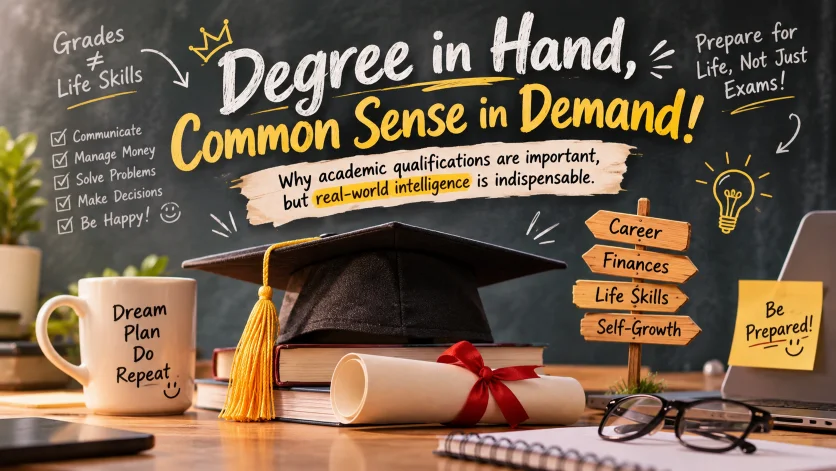
Degree in Hand, Common Sense in Demand!
Why academic qualifications are important, but real-world intelligence is indispensable.
Because life, unfortunately, doesn't provide an answer key at the end of every chapter!
Imagine a student graduating with an impressive academic record, several certificates, extracurricular achievements and a résumé worth celebrating. They can explain complex theories, memorise definitions and solve examination questions with ease.
Now, ask them to write a professional email, manage a monthly budget, handle a disagreement or make an important decision independently.
Suddenly, things get interesting!
Welcome to the gap between being educated and being prepared for the real world.
Academic education provides knowledge, discipline and the foundation for a successful career. But does knowing the answer to an examination question automatically mean knowing how to handle a real-life situation?
Not necessarily.
Knowing the definition of communication is one thing; communicating effectively with someone who disagrees with you is another. Studying financial management is one thing; managing your monthly allowance without spending it all during an online sale is quite another!
The point is not that academic education is insufficient. It is that education should prepare us for more than examinations.
The Classroom Is Important, But So Is Everything Outside It
A classroom teaches us subject knowledge, while the world outside tests how effectively we apply it.
Consider a few everyday situations:
- Communication: Can you express your ideas clearly, listen patiently and disagree respectfully?
- Financial Literacy: Do you know how to prepare a budget, save money and distinguish needs from wants?
- Time Management: Can you manage assignments, presentations and examinations without losing control of your schedule?
- Problem-Solving: Can you think independently when something goes wrong?
- Professional Etiquette: Do you know how to write appropriate emails, meet deadlines and accept feedback?
These abilities may not always appear on a marksheet, but they play an important role in personal and professional success.
The Skills That Don't Always Come with a Marksheet
Some essential life skills deserve greater attention during our educational journey.
- Communication: The Art of Making Yourself Understood
Speaking and communicating are not the same. Effective communication involves clarity, confidence, listening and understanding different perspectives. Even a brilliant idea needs effective communication to make an impact. - Critical Thinking: Question Before You Believe
In an age of endless information, developing independent thinking is essential. Check facts, question assumptions and examine reliable sources before forming opinions. Having an opinion is easy; having a well-informed one requires effort. - Financial Literacy: Your Wallet Deserves an Education Too
Learning to budget, save, understand interest and recognise financial risks can make a significant difference to your future. After all, a discount isn't a saving if you never needed the product in the first place! - Emotional Intelligence: Not Every Disagreement Needs a War
Patience, empathy and self-awareness help us work effectively with others. Accepting criticism, managing frustration and respecting different opinions are valuable skills in classrooms and workplaces alike. - Adaptability: Because Life Rarely Follows the Timetable
Plans change, technology evolves and new opportunities emerge. The ability to learn, unlearn and adapt is essential in an ever-changing world.
So, What Can We Actually Do About It?
Developing practical intelligence does not require another degree or expensive certification. It begins with everyday habits.
- Participate in discussions, presentations and group activities.
- Learn to manage your personal finances.
- Read beyond prescribed textbooks and explore different subjects.
- Take internships, volunteering and practical projects seriously.
- Develop professional communication and digital skills.
- Seek feedback, ask questions and learn from mistakes.
- Take responsibility for your decisions instead of depending on others to solve every problem.
Remember, mistakes are not necessarily signs of incompetence; they are opportunities to develop better judgement.
The Final Takeaway: Don't Just Collect Qualifications. Build Capability.
A degree can open doors. Knowledge can create opportunities. Academic achievements demonstrate dedication and intellectual ability.
But what happens after the door opens?
That is where communication, confidence, judgement, adaptability and practical intelligence begin to matter.
Education should not simply produce individuals who know the answers to examination questions. It should develop individuals who can identify problems, make informed decisions and contribute meaningfully to society.
So, chase those grades, earn those certificates and pursue your academic goals. But remember to develop the skills that help you navigate everyday life.
Because a degree may tell the world what you have studied. What you can actually do with that knowledge is what makes the difference!